
October 14, 2026
We will examine two sides of the same deceptive coin: the self-centered distortion of the Good News of salvation in Christ, whether through an all-encompassing positivism or through a self-absorbed negativism. These two extremes are captured, on the one hand, by the claim that “there is always hope” and, on the other, by the conviction that “there is no hope for me.”
The two extremes—“there is always hope” versus “there is no hope for me”—represent the highest forms of denial of the saving work of the Lord Jesus Christ. This denial arises from a focus on oneself, rather than on salvation and the Person of Jesus Christ.
“There is always hope” is the maxim of someone who takes himself or herself as the standard and measures everything according to personal efforts toward others. This seemingly encouraging message ultimately leads to despair. To offer hope in circumstances so serious that sound judgment and faith point toward a hardening of the heart —whose fruits are evil and whose logical conclusion is that there is no turning back —is, in practice, to deceive both others and oneself.
The source of such deliberate deception, even when the person engaging in it does so unconsciously, is the desire of the one serving to see success in his or her efforts to help. If I have failed now, then this is only temporary; my efforts and the time I invest will eventually produce results. This is how men and women think when they place their confidence in a positive outcome, regardless of the fact that the evidence and circumstances point in another direction.
If we place this state of selfish self-deception in the context of the parable of the four soils in Mark 4 and Matthew 13, we see that Jesus’ teaching does not permit such broad and all-encompassing positivism. Three of the four soils that receive God’s revelation concerning salvation and eternal life remain fruitless. These represent three-quarters of those whose hearts are described as rejecting the Word of God, which is the seed sown by the sower.
For some, the Word never reaches them at all; for others, it reaches them but takes no root and endures only temporarily; for still others, the Word is choked by their worldly concerns, because the kingdom of God and the promise of eternal life seem insignificant to them.
What hope is there for these 75% if the most important hope—the hope of eternal life with God and the forgiveness of sins through the work of Christ—has no place in their interests or their vision of the future? Therefore, the statement “there is always hope” is, in practice, empty rhetoric that serves as a form of self-protection, arising from an unillumined selfishness. For the person who serves in this manner, what matters is not God’s truth but rather concealing the reality that his or her efforts have produced no visible results.
The question is whether such an attitude of all-encompassing positivism will ultimately lead to the idea of “universalism” or “universal salvation.” This erroneous theology claims that Christ’s redemptive work will eventually encompass all people, including the wicked, those who have done evil, and those who rejected Him during their earthly lives. However attractive such a claim may be to the human soul, it is supported neither by Scripture, nor by the purpose and meaning of God’s saving plan in Christ.
The Lord teaches precisely the opposite: a person must believe in Christ, be born of the Spirit, and be baptized in water as a sign of this confession—that Christ is the Son of God and that God raised Him from the dead—in order to enter God’s kingdom and be saved. The claim that there is always hope, even for the most outspoken enemies of the gospel, obscures biblical teaching and the call to repentance and faith, which mark the point of entry into God’s covenant promise in Christ.
Of course, we have the examples of the thief on the cross, who repented and called upon Christ in the final moments of his earthly life, and of the apostle Paul, who was transformed from a fierce persecutor of believers into an apostle of the faith. Yet these examples in no way establish an all-encompassing hope for everyone, at all times, regardless of their spiritual and moral condition.
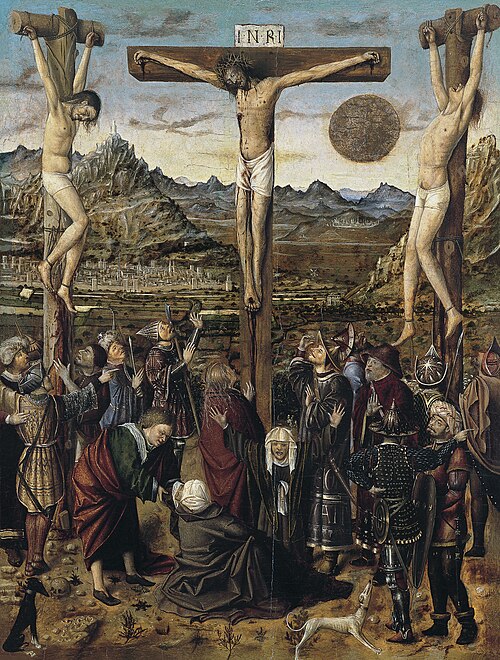
This painting is titled The Crucifixion. It is an oil on panel work created circa 1450–1460 and is permanently housed in the Museo Nacional Thyssen-Bornemisza in Madrid, Spain
On the contrary, these examples show that God’s call is sovereign and that He acts according to His will and in accordance with the inward searching of the human soul, which is not always visible to those observing from the outside. The overall teaching of the New Testament indicates that those who reject Christ remain in their sin and will be excluded from God’s presence in eternity. The day of judgment will indeed be dreadful for them because they have despised the precious gift of Christ’s shed blood for the forgiveness of their sins.
If hope were automatically granted to everyone without exception, the apostles would not continually exhort believers in their letters not to abandon the faith, but to hold fast to the hope they have in Jesus. Thus, the statement “there is always hope” must be revised to read: “There is hope for everyone who sincerely follows the Lord Jesus Christ and His teaching.”
Let us now consider the other deceptive system, which is likewise a product of supreme selfishness. It is built on the same foundation, visible even in the sin of Satan: the self comes first and becomes the source of revelation about oneself, the world, life, and ultimately God. The expression that summarizes this state of destructive self-centeredness is “there is no hope for me.” This statement takes on an even more dramatic character when it is expressed by a believer—or rather, by someone who is familiar with the teaching of Christ.
To claim that you know Christ and, at the same time, that there is no hope for you is to deny what Christ has done for you and for every other wretched sinner: He sacrificed Himself so that you might receive forgiveness of sins and eternal life with God. Here we encounter a profound opposition to the Word of God, which may be likened to a seemingly quiet but persistent rebellion against the message of the gospel. The gospel of the kingdom of God is clear: repent and believe, for the kingdom of God is at hand.
This message has been proclaimed in countless contemporary sermons, preserved in historical records of the ministry of Christ’s Church, and presented in Scripture itself through both John the Baptist, Christ’s forerunner, and Christ’s own proclamation of the gospel. Christ’s sacrifice on the cross was His act of giving Himself to become sin in our place and to bear the eternal punishment for our sins against God. Through His resurrection from the dead, the Lord Jesus conquered death, and everyone who believes in Him will be saved. These are realities that remain alive today for everyone who seeks truth and God through the work of the Holy Spirit, sent by Jesus and proceeding from the Father.
If someone knows these truths and claims to possess the Son of God, while simultaneously declaring that there is “no hope” for him or her, that person is effectively calling God a liar. Such a person is claiming that God sacrificed His Son for nothing and that Jesus’ sacrifice is somehow insufficient to save and redeem him or her.
God says there is hope in Christ, but the person responds, “No, that is not true; there is no hope of salvation for me.” Perhaps there is hope, the person concedes, but it is for others, not for me. My case is exceptional. God’s Word may apply to everyone else, but not to me.
Thus, because the self once again becomes the source of revelation and the ultimate authority, personal perception and experience become the standard of truth and reality. The psychological torment and hopelessness experienced by such a person become a greater truth than the Word of God because his or her own world and personal experience are treated as paramount, thereby denying the reality that exists beyond them.
In other words, if I feel and perceive reality as hopeless, then it must be hopeless for everyone, and the fact that God’s Word says otherwise becomes irrelevant. The self, dominated by selfishness, clouds reason to such an extent that only personal experience and emotions are regarded as real. All other human experiences are invalidated because they do not relate to me or benefit me.
Consequently, physical or emotional pain becomes greater than the hope of healing and deliverance for people in this state. Their hopelessness arises from their own selfishness and from the magnitude of the self, which is regarded as greater, more exalted, and more significant than God’s truth.
At the same time, and paradoxically, while calling God a liar through their unbelief and self-righteousness, these people see themselves as victims—and uniquely so. Their sense of uniqueness usually rests on the frequently repeated conclusion that their suffering is so extraordinary that no one can understand them. This sense of uniqueness extends to the point where even Christ’s suffering on the cross is considered insufficient to provide redemptive coverage for their own suffering. Christ is thus portrayed as inadequate in the face of the suffering that supposedly makes them unique and places them beyond the reach of His work of forgiveness.
This is one of the most remarkable forms of unbelief and rejection of the gospel. It is equally remarkable that such an attitude evokes sympathy precisely because the suffering and pain being claimed are, in many respects, legitimate. Yet this suffering does not arise from the actual absence of hope, but from the rejection of hope in the name of one’s own significance and greatness. Ultimately, becoming hardened in this condition does indeed lead to hopelessness, because rejecting hope in Jesus Christ truly results in hopelessness. The circle closes.
An additional problem for believers seeking to help such a person is the misconception concerning the source of that person’s suffering. Because the pain—whether psychological or physical—is visible, the person seeks compassion from believers and receives it. Yet the desire to receive such compassion may itself become a source of motivation for the person to remain in a state of suffering.
The deceptive element, naturally, is the claim that the source of suffering lies outside the person who suffers: that hopelessness is objective; that nothing can truly be done to help this person; that no one really understands; and that the Lord’s sacrifice is insufficient—or, indeed, unworthy of the depths of this person’s suffering. Consequently, the believer who wishes to help but cannot see beneath the veil of this deception or recognize its satanic origin remains bound by an obligation to offer endless “Christian” sympathy to an endless mockery of the Lord’s saving work.
This is not a callous disregard for the emotional suffering of someone afflicted by unclean spirits. Many people who suffer in this way are genuinely seeking help. On the other hand, for those who dwell on the grandeur of their own suffering, the real issue is that the inability to find hope has become something beyond questioning. More precisely, it concerns the dominant and demanding insistence that others accept unbelief and the minimization of God’s power and action on the pretext that, apparently, His power does not apply to everyone.
The same applies to physical suffering. If someone is ill and claims to understand the gospel, but prayers offered on that person’s behalf do not bring healing, the person may seek treatment by other means, including methods that may be contrary to the Lord’s teaching—turning to people who engage in unclean spiritual practices. In such a case, suffering is used to justify the accusation that God’s power is weak and to claim that pain provides justification for seeking an alternative.
The suffering in this case is physical and leads to emotional distress, but it is primarily physical. Nevertheless, the mechanism is the same. This applies specifically to cases in which the mechanism is deliberately employed by the individual, not to every person who is ill. The reasoning is as follows: I am not obliged to wait for God to heal me; if He does not do so, I will find an alternative. Faith and hope in God are absent because personal suffering is treated as a reality that justifies a refusal to trust in God’s healing.
Of course, God’s sovereignty must always be taken into account. It requires us to recognize that prayer is subject to God’s will and that His perfect will concerns salvation for eternity, not merely improvement in health or financial circumstances here on earth. God may use suffering to turn a person’s attention toward eternity. Alternatively, He may use it to reveal that the sufferer has no genuine interest in God’s help and, because God supposedly does not help—whether because He does not wish to or cannot—the sufferer comes to believe that the experience of suffering provides complete moral justification for turning to “healers” who work through demons.
John Chrysostom states this bluntly:
Have you not heard what the prophet said? Or rather, have you heard what God said through the prophet? He said that demons can do neither good nor evil. Even if they could heal and wished to do so—which is impossible—you should not accept an everlasting and endless punishment in exchange for an insignificant benefit that may soon be destroyed.1
Will you heal your body only to destroy your soul? You are making a bad exchange. Will you anger God, who created your body, and call upon the demon who devises schemes against you?
It is very easy, when the soil of our hearts produces no fruit for the kingdom of God, to seek—and readily find—justification in our human, fleshly reasoning and in our desire for indiscriminate sympathy. We then expect God and others to accept our behavior, even when it amounts to poorly concealed, rebellious unbelief.
In many cases, prayer for such souls is justified. In some cases, however, it may no longer be necessary. Certainly, the saints must not yield to influences that seem to cry out for compassion while carrying the underlying message that God is powerless or cruel. Such messages do not remain without spiritual consequences. The love God has shown us through the sacrifice of His Son calls us to obedience and to confidence that He will care for us as He has promised. Our primary concern must be to seek His kingdom and His righteousness.
In conclusion, should we help people whom we recognize as having no interest in the gospel, but only in finding an audience for themselves—whether by offering us unnecessary advice and formulaic encouragement, or by disguising their unbelief as a sincere struggle to find the proper place of submission to God while simultaneously denying His truth? What if their pursuit of self-fulfillment conceals the absence of sincerity in their hearts?
The source of their dilemma, put simply and bluntly, is their hatred of the truth. The wicked flee from Christ because they hate the light.
And this is the judgment: the light has come into the world, and people loved the darkness rather than the light because their works were evil. For everyone who does wicked things hates the light and does not come to the light, lest his works should be exposed. (John 3:19-20)
The answer, of course, is not unequivocal. Some of these people, if they were to heed counsel and the teaching of the New Testament concerning the true hope and healing found in Christ, might turn away from their condition and be set free through repentance and faith. Others simply enjoy the attention they receive from those willing to give it to them because of their claimed status as servants or as people in need of help.
Ultimately, however, through the Spirit of God and the wisdom He provides, we are obligated to show mercy to people and care for their souls. In many cases, this means exposing such duplicity, of which the person may not even be aware, or limiting our interaction with them when every spiritual effort has proved fruitless.
Jesus identifies this condition very clearly in Mark 4 and Matthew 13:
And he said to them, ‘To you has been given the secret of the kingdom of God, but for those outside everything is in parables, so that they may indeed see but not perceive, and may indeed hear but not understand, lest they should turn and be forgiven. (Mark 4:11)
Selected Biblical References
- The Parable of the Sower: Mark 4:1–20; Matthew 13:1–23; Luke 8:4–15.
- Repentance and Faith: Mark 1:14–15; John 3:3–18; Acts 2:37–39; Acts 16:30–31; Romans 10:9–13.
- Judgment and Accountability: Matthew 7:13–23; Matthew 25:31–46; John 3:18–36; 2 Thessalonians 1:7–10; Revelation 20:11–15.
- Christ’s Sacrifice and Forgiveness: Isaiah 53:4–6; Romans 5:1–11; Romans 8:1, 31–39; 2 Corinthians 5:17–21; Hebrews 7:25; Hebrews 10:10–14; 1 John 1:7–9.
- Conversion and Grace: Luke 23:39–43; Acts 9:1–22; 1 Timothy 1:12–16.
- Self-Deception and Hardening of the Heart: Proverbs 3:5–7; Jeremiah 17:9–10; Romans 1:18–25; Hebrews 3:12–13; James 1:22–26.
- Suffering and God’s Sovereignty: Job 1:20–22; Psalm 13:1–6; John 9:1–3; Romans 8:18–28; 2 Corinthians 12:7–10; James 5:13–16.
- Occult Practices: Deuteronomy 18:9–14; Isaiah 8:19–20; Acts 19:18–20; 1 Corinthians 10:14–22.
- Hope and Perseverance: Matthew 6:25–34; Romans 15:13; 1 Corinthians 15:19–22; Hebrews 10:19–25; 1 Peter 1:3–9.
- Pastoral Care and Correction: Matthew 18:15–17; Galatians 6:1–2; 2 Timothy 2:24–26; James 5:19–20.
- John Chrysostom, Against the Jews. Homily 1. VII (6). https://www.tertullian.org/fathers/chrysostom_adversus_judaeos_01_homily1.htm. ↩︎

